Protein and resistance exercise
The lean-tissue finding has encouraged attention to adequate nutrition and resistance exercise during weight management. Protein provides material for body tissues; resistance exercise asks muscle to work against a load. These are relevant topics for a care discussion, not proof that a particular routine prevents semaglutide-associated lean-mass loss.
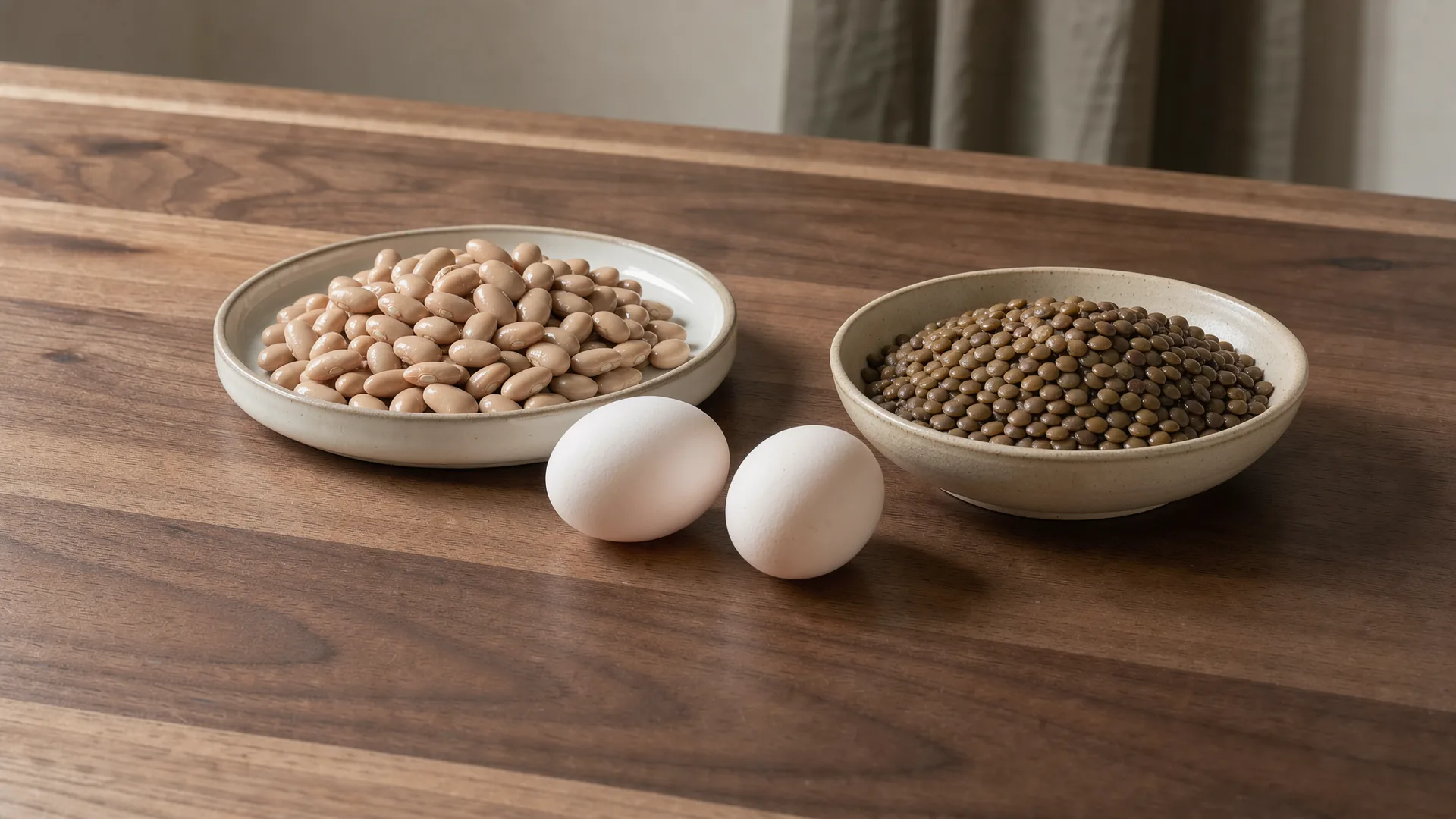
The published composition analysis reports tissue changes; it does not establish a universal protein target or a tested exercise plan for all semaglutide users. A meal photograph cannot supply either. Age, current function, kidney disease, appetite, and other circumstances affect an individual nutrition and activity discussion.
When appetite is lower, the amount and variety of food a person can comfortably eat may change. That is one reason to discuss nutrition alongside symptoms and weight. This page provides no gram target, supplement recommendation, or exercise prescription.
What the body-composition study measured
A STEP body-composition substudy measured reductions in fat and lean mass during semaglutide treatment. It used DXA, a scan that estimates the body’s tissue composition. The finding is a reason to look beyond total weight when describing treatment.
Lean mass is the portion of the measurement that is not fat or bone mineral. It contains skeletal muscle and other tissue, as well as water. Calling every change in lean mass “muscle loss” makes the result more specific than the measurement allows.
The study also does not provide a personal prediction. A group average cannot identify how much muscle one reader will lose, whether that person will become weaker, or how their daily activity will change. Those questions require information beyond the scan result.
Muscle amount and muscle function
Muscle function concerns what a person can do: standing from a chair, carrying groceries, or climbing steps. Tissue quantity is related to those tasks, but it is not the same outcome. Measuring a smaller amount of lean tissue does not prove a loss of ability.
Sarcopenia refers to a condition involving loss of muscle strength and muscle quantity or quality. It is a particular concern with aging and reduced physical reserve. The concern raised by weight loss is reasonable, but the substudy cannot establish that every participant developed sarcopenia.
A fuller assessment would consider starting strength, change over time, nutrition, illness, and activity. The useful clinical question is broader than whether a body-composition percentage moved. It includes whether ordinary activities have become easier or harder.
Weight and heart benefits still matter
The main STEP 1 trial found a mean 14.9% weight reduction over 68 weeks with semaglutide, compared with 2.4% with placebo. That substantial average loss is compatible with a separate concern about the composition of the weight lost.
In SELECT, adults with existing cardiovascular disease experienced fewer major cardiovascular events. The study did not establish that lean mass is irrelevant, and the composition substudy did not cancel the cardiovascular result. They measured different outcomes in different study groups.
A balanced interpretation keeps benefit, burden, and function together. It avoids treating all weight change as equivalent while also avoiding a claim that semaglutide directly destroys muscle. The available measurement cannot support that sweeping description.
Questions for the prescribing discussion
Useful questions include how starting strength will be assessed, what changes in ordinary activity matter, and whether nutrition support is appropriate. Existing difficulty with standing or carrying things deserves to be mentioned rather than reduced to a number on a scan.
The pace of weight loss, persistent digestive symptoms, and reduced food intake can all change that conversation. The side-effects page explains tolerability, while the research overview places body composition beside the larger trials. No online calculation can replace assessment of the person experiencing the change.